Feefo Platinum Trusted Service Award 2026

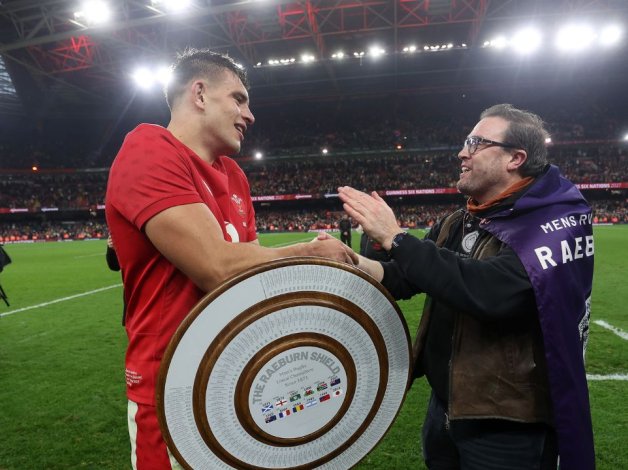
Wales’ 35-28 victory over New Zealand at Principality Stadium on Saturday 14 November delivered far more than a memorable result. It also made Wales the latest holders of one of international rugby’s most distinctive unofficial titles: the Raeburn Shield.
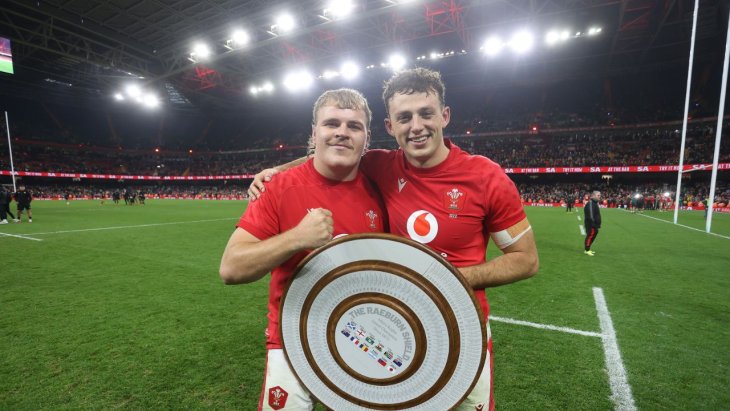
The Shield attracted considerable attention in Cardiff following the match, with the players able to celebrate with the physical trophy after defeating the All Blacks.
But what exactly is the Raeburn Shield, why does Wales now hold it and how can another nation take it from them?
What is the Raeburn Shield?
The Raeburn Shield is an unofficial lineal championship in men’s international rugby union.
Unlike the Rugby World Cup, Six Nations or Rugby Championship, it is not won through a tournament or league table. Instead, it operates on a simple principle: to become the holder, a team must beat the current holder.
Once a nation has claimed the Raeburn Shield, it puts the title on the line whenever it next plays an international Test match.
If the holder wins, it retains the Shield. If the match is drawn, the holder also keeps it. But if the holder loses, the Shield passes to the team that has beaten them.
It is similar to the concept of a lineal world championship in boxing, where the title can be traced through the succession of champions rather than being decided through a standalone competition.
That means an otherwise ordinary international fixture can suddenly become a Raeburn Shield match, adding another layer of significance to the result.
Why is it called the Raeburn Shield?
The name takes international rugby back to its very beginnings.
On 27 March 1871, Scotland and England contested what is recognised as the first men’s international rugby match.
The game was played at Raeburn Place in Edinburgh, where Scotland defeated England.
Under the Raeburn Shield concept, Scotland are therefore regarded as the inaugural holders. When England defeated Scotland in their next meeting in February 1872, the title changed hands for the first time.
From that starting point, the line of results can be followed through more than 150 years of men’s international rugby.
Who created the Raeburn Shield?
The Raeburn Shield concept was devised by New Zealand-born rugby supporter David Algie in 2008.
Rather than creating an entirely new competition, Algie applied the lineal championship principle retrospectively to the history of Test rugby, beginning with Scotland’s victory over England in 1871.
Every time the holder was subsequently beaten, the title passed to the victorious nation.
This creates a continuous chain connecting the modern international game with rugby’s first Test match.
Importantly, the Raeburn Shield is not an official World Rugby competition or title. It remains a fan-led initiative, albeit one that has developed a growing profile within the sport.
Is there an actual Raeburn Shield?
Yes.
For much of its existence, the Raeburn Shield was primarily a historical and statistical concept. However, a physical trophy was completed in January 2026.
The Shield is made from English oak, representing the England team that took part in the original international in 1871, while its name commemorates Raeburn Place in Scotland, where that match was played.
The physical trophy made its first appearance during the opening round of the 2026 Six Nations, when England defended the title against Wales at Twickenham.
Its introduction has given a tangible presence to a concept that had previously existed largely through rugby records and the community following its history.
How does a team win the Raeburn Shield?
The rules are deliberately straightforward:
- The current holder defends the Shield in its next international Test.
- If the holder wins, it keeps the Shield.
- If the match is drawn, the holder retains it.
- If the holder loses, the winning team becomes the new Raeburn Shield holder.
- The new holder then puts the Shield on the line in its next Test.
There is no final and no set tournament schedule.
The Shield simply follows its holder around the international rugby calendar, whether that means a Six Nations fixture, a Nations Championship match, a Rugby World Cup encounter or another Test match.
Which countries have held the Raeburn Shield?
The title has travelled extensively during its history.
According to the Raeburn Shield's historical record, 12 nations have held the title since Scotland became the inaugural holder in 1871.
They are:
- Scotland
- England
- Wales
- Ireland
- France
- South Africa
- New Zealand
- Australia
- Argentina
- Romania
- Samoa
- Japan
That list is one of the features that makes the concept particularly interesting. The title does not depend on rankings or qualification for a particular competition.
A team simply has to defeat whoever holds it.
Why does Wales hold the Raeburn Shield?
Wales became the latest Raeburn Shield holder by defeating New Zealand 35-28 at Principality Stadium in Cardiff on 14 November 2026.
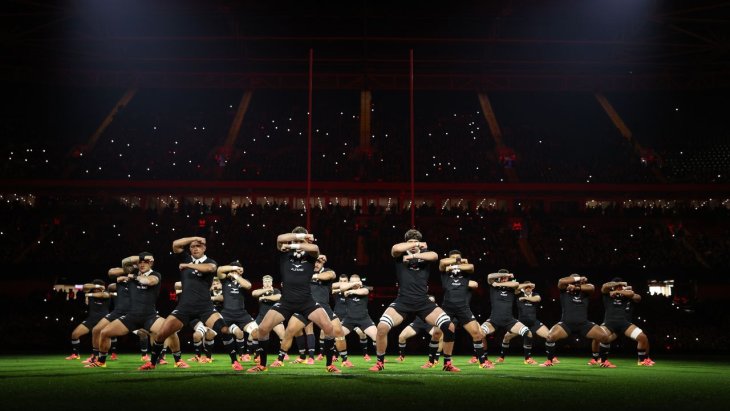
The All Blacks had arrived in Cardiff as the holders, meaning the title was on the line during the Nations Championship fixture.
Wales’ victory therefore transferred the Shield to Steve Tandy’s side.
It was already a significant result for Welsh rugby. The Raeburn Shield provided another historical dimension to the occasion and placed Wales at the head of a line of champions stretching back to the first international rugby match 155 years earlier.
Who did Wales win the Raeburn Shield from?
Wales took the Shield from New Zealand following their 35-28 victory in Cardiff.
New Zealand’s 2026 journey with the title demonstrates how quickly the Shield can change hands.
Because every Test involving the holder becomes a defence, its route does not necessarily follow the traditional hierarchy of international rugby. One defeat is enough for a reign to end and another to begin.
This creates a continually evolving history alongside rugby’s established competitions.
What happens to the Raeburn Shield next?
The fundamental rule of the Raeburn Shield means that Wales cannot simply keep it following their victory over the All Blacks.
Their next Test becomes a title defence.
Whoever next defeats Wales while they hold the Shield will become its new holder. If Wales continue to win or draw their matches, their reign continues.
It is this simplicity that has helped the Raeburn Shield attract interest among rugby supporters.
Every time it changes hands, another match is added to a story that can be traced directly back to Edinburgh in 1871.

A different way to follow international rugby
The Raeburn Shield does not seek to replace the Rugby World Cup or international rugby’s established championships.
Instead, it provides another way of viewing the sport’s history.
A Test played today can be connected through an uninterrupted sequence of results to the first international match more than 150 years ago. Major finals, famous upsets, tours and regular Test matches can all become part of the same story.
Following Wales’ victory over New Zealand in Cardiff, that story has gained a new chapter.
For now, the Raeburn Shield belongs to Wales.
And from their next Test onwards, it will once again be there to be won.
Support the Welsh Rugby Union with travel packages from Gullivers Sports Travel, here.
NEWSLETTER
Get the latest information about our travel packages to the world’s top sporting events.

Upcoming events
Why Gullivers?

Over 50 years in the game

Guaranteed tickets

A personal and friendly touch
